Writing technical specifications, designing mobile apps, bots, online services and platforms
Before moving on to programming, a large amount of analytical work is needed to develop high-quality software. Its volume often even exceeds the development work itself.
The first step is to formulate together with the client the goals of the product and its requirements. It may be unnecessary to build a new product from scratch: it can be cheaper to take a ready-made one or assemble a product from ready-made blocks. Only if the analysis shows that there are no analogues, or that buying a ready solution would cost more than developing one, do we move on to planning the production of a new system.
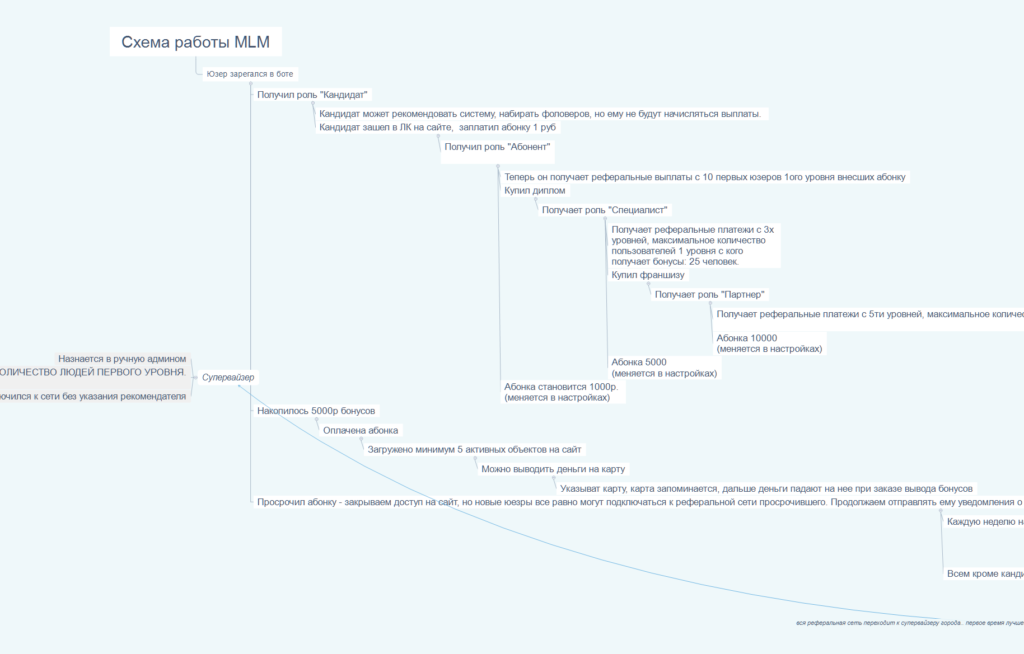
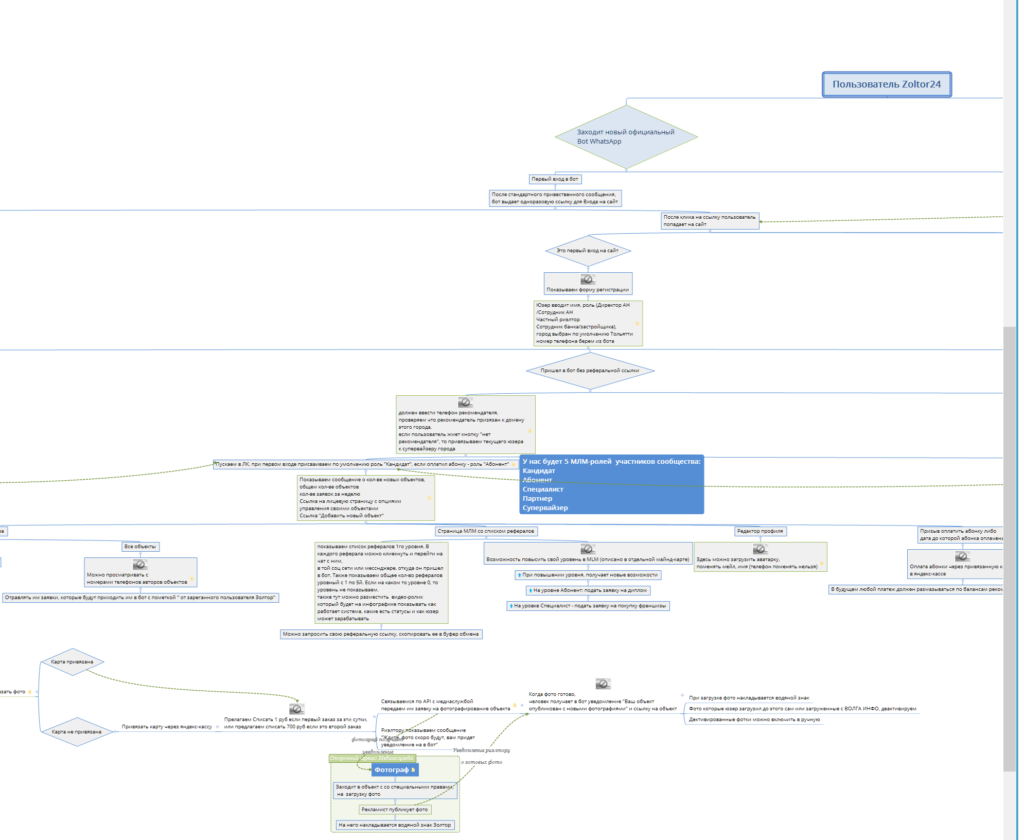
First we sketch the concept of the future information system as mind maps in XMind. This shows who our main users are and how their workflows in the future system differ. The main use cases, user stories or software usage scenarios are formed.
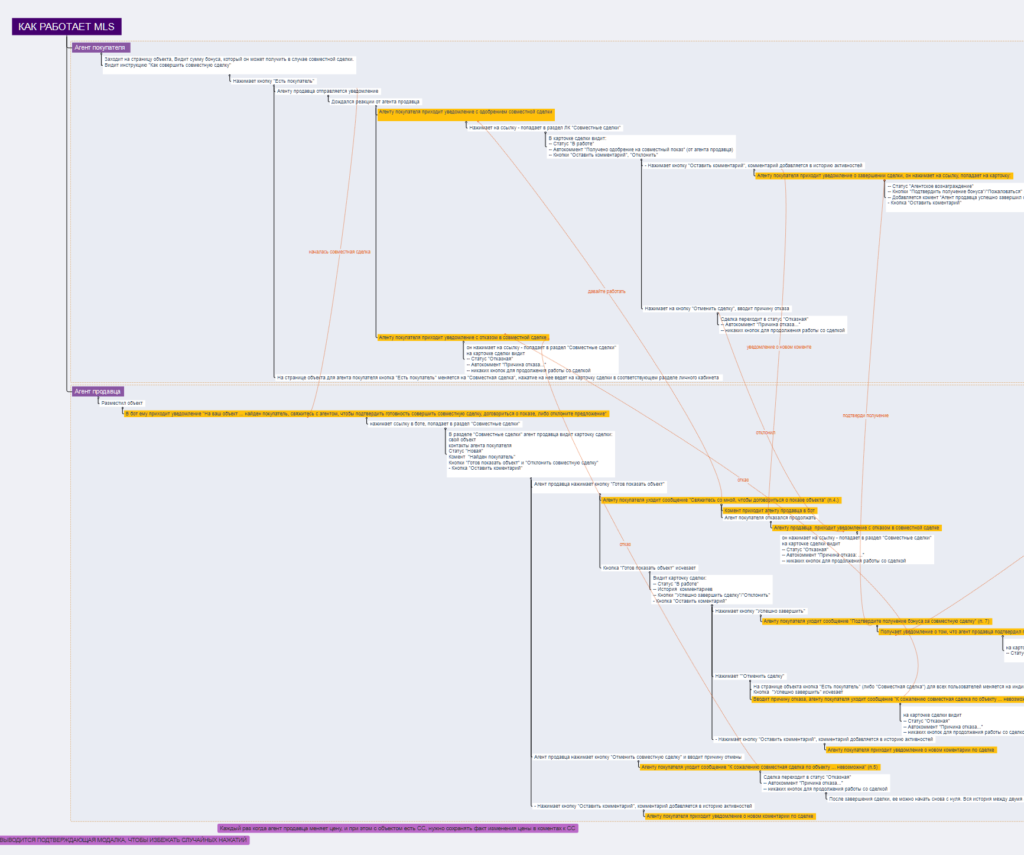
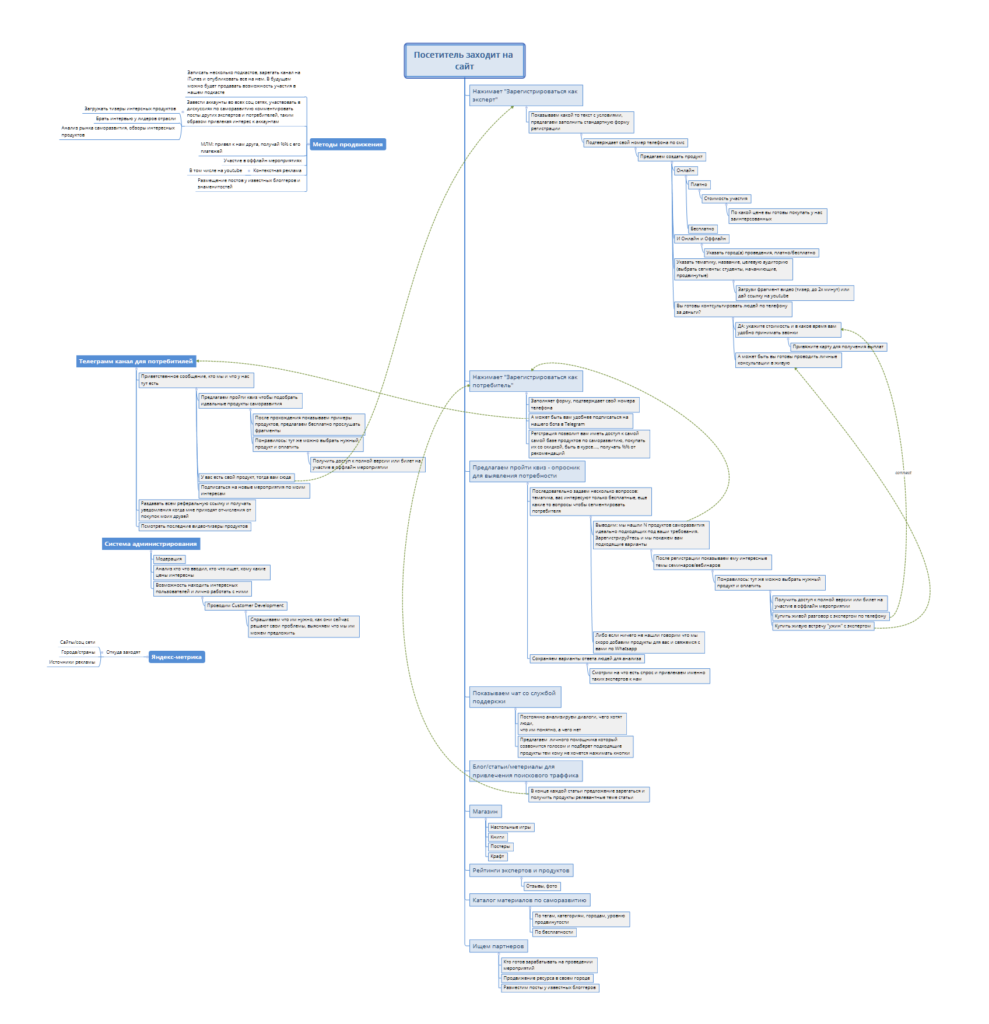
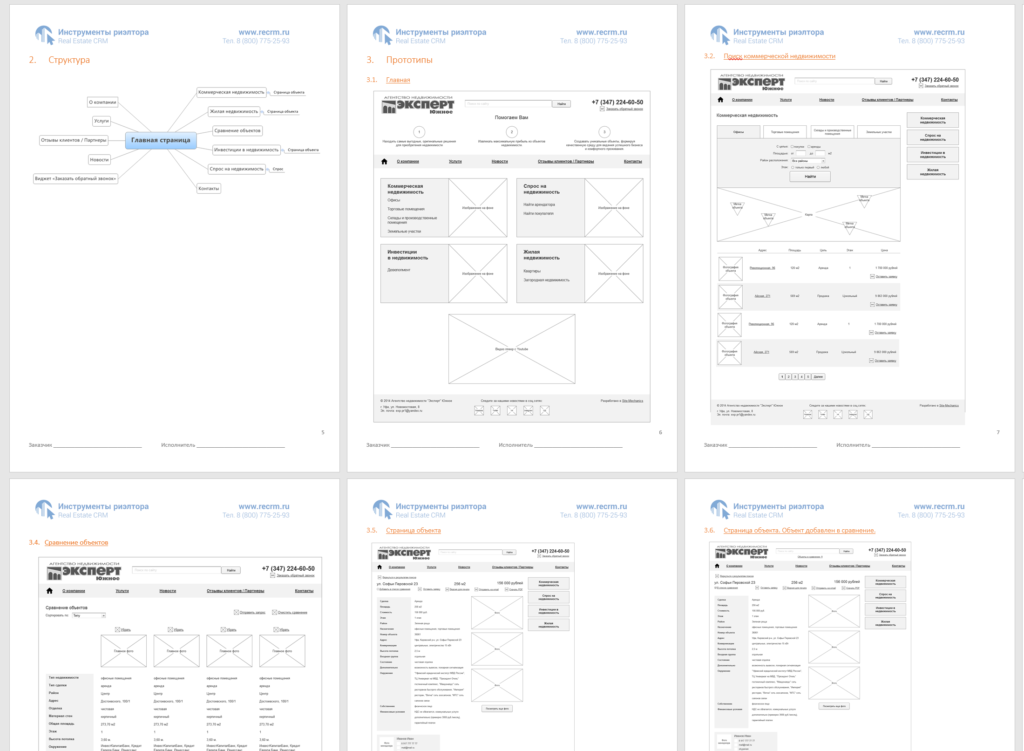
Based on these scenarios we create prototypes of the future system in Miro or Axure. We sketch each screen/page schematically and arrange them in the order in which our users will interact with the system.
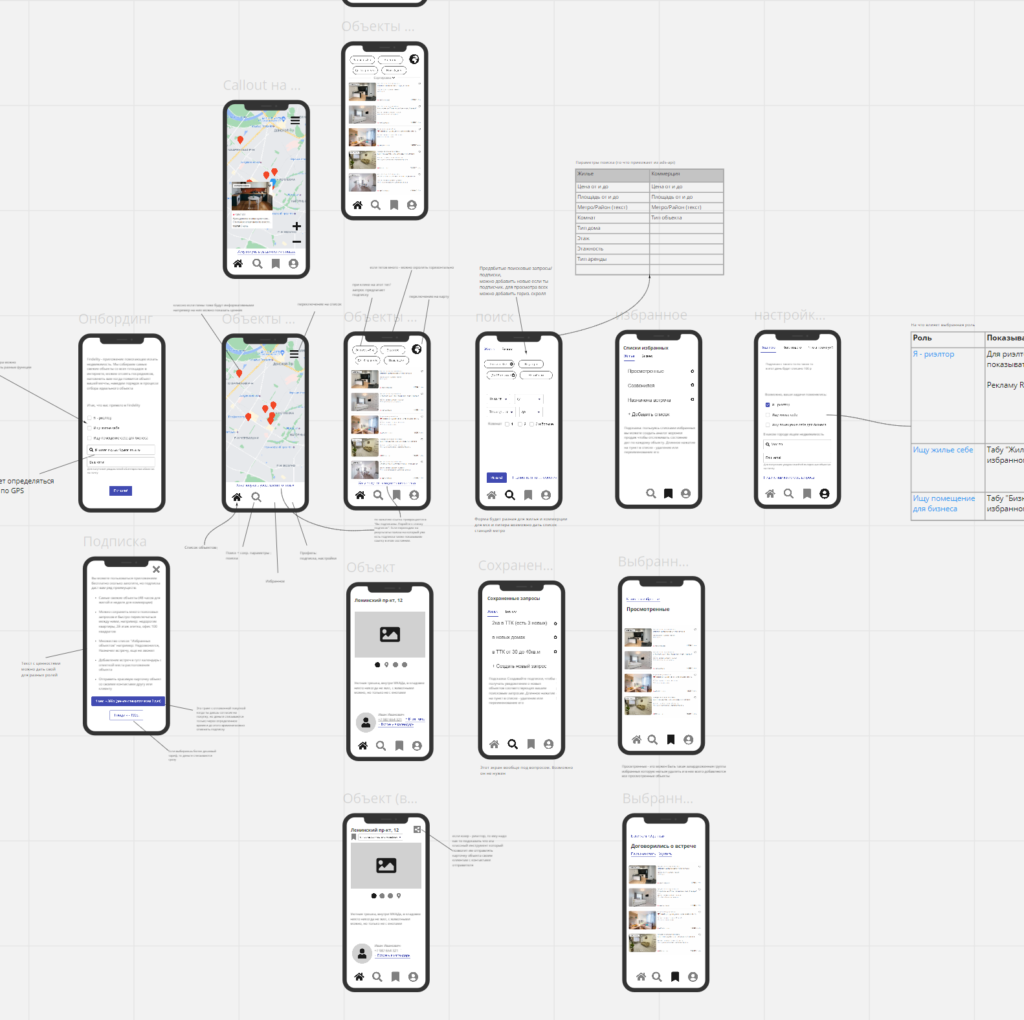
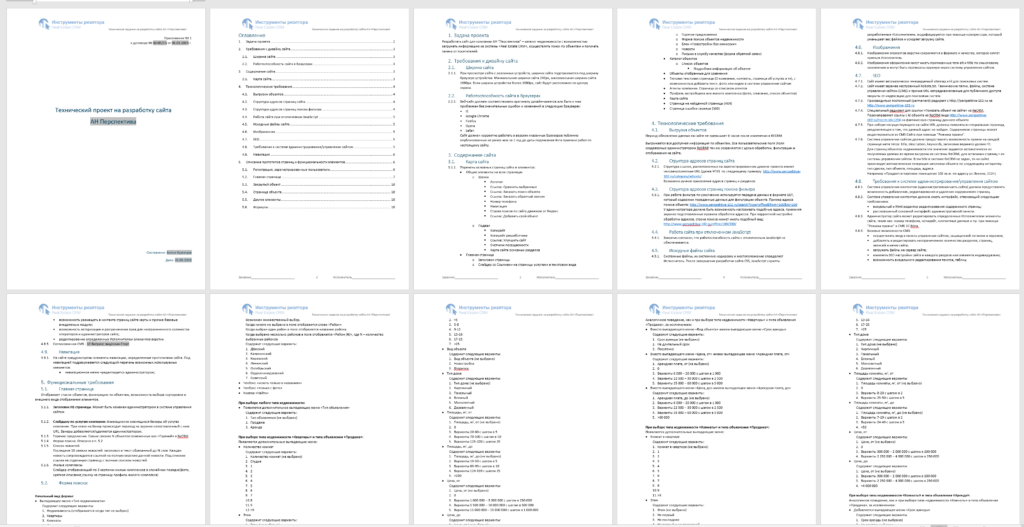
Next, these prototypes form the basis of a written technical specification, where we describe in detail all functional and non-functional requirements for the product, its characteristics and capabilities, and the behavior of each screen/page. In some cases the specification already includes final designs of each screen drawn in Figma.
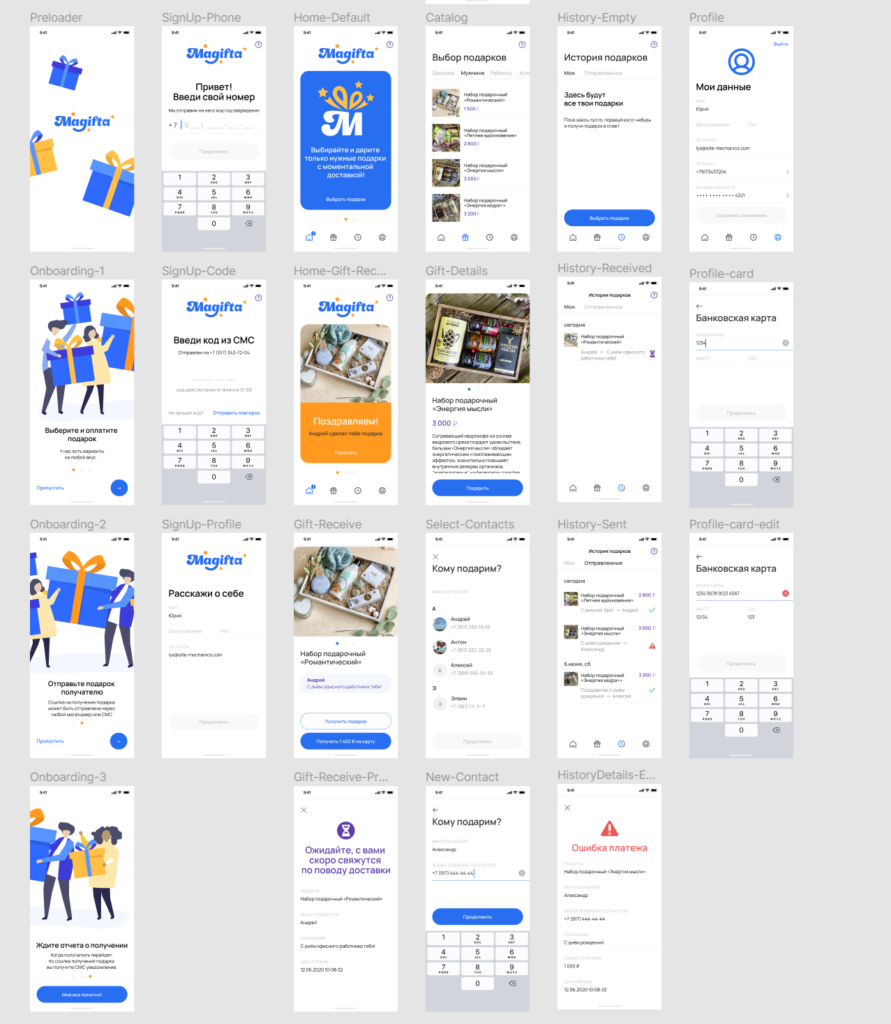
The finished technical specification is a valuable deliverable in its own right: the client can use it independently, implement it with their own team or pass it to other developers. Alternatively, we are happy to take it on and build the finished product ourselves.